• Home > Posts tagged 'Poser'

Posts Tagged ‘Poser’

Don’t Make the Little Guy Angry…

Tuesday, July 19th, 2011

…You’ll not like him when he’s angry.

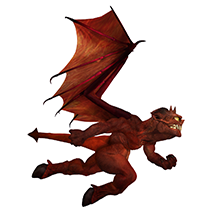
Angry Imp

My avatar was mistaken for a goblin’s mugshot and he really isn’t happy about it.  First he’s never been in trouble with the law.  So they don’t have his DNA, clawprints or photograph on file.  Secondly he’s not a goblin:  Goblins don’t have tails or wings – at least not the goblins he’s come across.


SkinVue9 Review

Wednesday, December 15th, 2010

I’ve used David Burdick’s SkinVue since it first came out.  This handy tool for Vue speeds up the process of making Poser figures look good in Vue.  It can work with figures brought in as Poser, obj, or Collada import so both Poser and Daz Studio users can make use of it.  SkinVue can work with a lot of Poser 8 and Daz figures:

  • Daz’s Michael (M1,M2,M3,M4 and The Freak)
  • Daz’s Victoria (V1,V2,V3 and V4)
  • Daz’s Stephanie Petite
  • Daz’s David
  • Daz’s Aiko
  • Daz’s The Girl
  • Daz’s Millennium Kids
  • Daz’s Kids4
  • Poser Jessie
  • Poser James
  • Poser Ben and Kate
  • Poser Judy
  • Poser Don
  • Poser Will and Penny
  • Poser Miki
  • Poser Laroo
  • Poser Sydney
  • Poser Simon
  • Poser G2 Males
  • Poser G2 Females
  • Poser Terai Yuki2

SkinVue9 is available for new SkinVue users and as a SkinVue9 Upgrade for existing users at Cornucopia3D

So why would you want SkinVue9?

The first big improvement in SkinVue9 is its easier to install than earlier versions – Vue now includes the wxPython library used by SkinVue so all the fiddling around downloading and installing that as well as SkinVue has been done away with.

SkinVue’s biggest selling point for me continues to be that it allows enhancement of the look of Poser figures brought into Vue without having every texture.  I remember the pain of manually work through each and every texture in a Poser import to correct bump maps, highlight colours, reflections and other settings to get a render that didn’t look plastic.

SkinVue9 has two basic modes of operation Enhanced and Procedural.  To help compare and contrast the different modes I’ve rendered the same two shots of Daz’s Victoria 4 without enhancement and with each of the modes.  Please forgive the hair – it’s a rather old hair model but I always think Victoria looked a bit odd bald.  All renders were carried out with the same atmosphere, lights and render settings – the only changes were SkinVue’s to the figures textures.

First here is the unenhanced render of the imported Poser figure…

Victoria 4 No SkinVue

Victoria 4 No SkinVue

Victoria 4 No SkinVue9 Close Up

Victoria 4 No SkinVue Close Up

Enhanced mode takes the texture maps applied to a Poser model and improves the way they appear in Vue.  Personally I think the result is a far more natural looking skin texture than the out the box Poser texture.

Victoria 4 SkinVue9 Enhanced

Victoria 4 SkinVue Enhanced

Victoria 4 SkinVue9 Enhanced Close Up

Victoria 4 SkinVue Enhanced Close Up

Procedural mode uses no texture maps and gives fast rendering; it’s very useful for figures in the distance allowing a great saving on system resources in Vue.  As you can see from the close up shot it’s not so good for close up work.

Victoria 4 SkinVue9 Procedural

Victoria 4 SkinVue Procedural

Victoria 4 SkinVue9 Procedural Close Up

Victoria 4 SkinVue Procedural Close Up

SkinVue offers a lot more options for working with Poser figures in Vue.  You can tune the look of the figure’s texture by modifying warmth, tone, spot, veins and other characteristics.  You can change the colour of the figures lips and nails within Vue without going back to Poser.  You can modify the skin tint in the same way.  Bump values for the head, body, nails and lips can all be changed separately.  Specular shine and intensity can be tweaked without delving into Vue’s material editor over and over again.

You can also turn on tooning of the figure to give a cel shaded, cartoon skin renderer.  The width of the toon edge is configurable.

Victoria 4 SkinVue Toon Render

Victoria 4 SkinVue Toon Render

A separate tab allows access to controls for your figures eyes including various settings for the white and for the iris.  The tint of the white and the iris can easily be set again saving time by avoiding having to go back to Poser to make changes.  Controls also allow the strength of highlights and a reflection map to be set.  The basic highlight options are straightforward to use.  I’m not sure if it’s a lack of skill on my part but I find the reflection map offer doesn’t quite give the results I’d like.  The reflections seem dull and faint even when I turn the settings up to their maximum values.  However unless you’re doing extreme close up pictures of eyes this won’t be a huge issue.

A new feature in SkinVue9 allows easy access to the color, bump, SSS, specular and wetness  texture maps  applied to a model making swapping them quick and easy.  This is potentially another massive time saver over having to open Poser and fiddle around there to change a texture map.

It also includes a number of handy effects – splothching, dirt and wetness can all be applied to a figure in Vue.  Wetness can be configured using a variety of different maps for drips or drops of various sizes.  Layers provide the option to add a layer over the basic texture for Blood, Dirt, Cyborg, Mesh and Reptilian look.

SkinVue includes sixteen preset atmospheres and six preset sets (that add lights and objects to a scene focused on the figure) to help quickly produce attractive renders.  I find these particularly useful when first working with a figure in getting it set up before adding it into a scene or setting up my own lights.

To help with productivity SkinVue lets you save your settings and then load them on other figures in the future.  This is a great time saver if you have a particular “look” you like and want to use over and over again.

SkinVue isn’t perfect.  Personally I can’t really see the point of the underwear layer options for V4 it just seems a bit of a gimmick to me.  I’d really like the Atmospheres tab to give more feedback when an option is selected as I’ve found myself clicking repeatedly unsure if anything has changed without rendering.  Similarly the Maps tab is sometimes a little slow to respond and an indication that it was working (and that Vue hadn’t crashed) would be helpful.

Overall: SkinVue remains an essential tool for any Vue user who uses Poser or Daz figures in their renders and who doesn’t like spending hours fiddling changing settings in textures over and over again.

Vue Lighting Rig #16: Three Point Lighting- Part 3

Monday, April 21st, 2008

Last week in part 2 of Vue Lighting Rig #16: Three Point Lighting – Part 2 I covered two variations on a three point lighting rigs. Tonight I’ll cover another of the variations.

Again the key light is at 30 degrees to the horizontal and 45 degrees from the front of the subject to be lit. The fill is placed at 90 degrees to the key, at the subject’s eye level and is horizontal. This time the back light is placed behind the subject pointing directly towards the fill and at 90 degrees to the key.
I’ve turned shadows off on the fill and the back light. The relative power of the lights in the rig are:

  • Key: 100%
  • Fill: 60%
  • Back: 40%

Last week we saw how a back light may provide virtually no light in a render even though in real life it might have quite an impact on a picture. To check this rig benefits from the back light I did a quick render with just the back light. I turned the back light’s power up to 1000 so I can see where it is casting it’s light.

As you can see it is creating highlights along the left hand edge of the subject so this position does provide some illumination that will separate the figure from the back drop.

Here is the final render with all three lights.

All of the above images were made using Poser 7 and Vue 6 Infinite. The figures skin texturing was enhanced using SkinVue.

Vue Lighting Rig #16: Three Point Lighting- Part 2

Monday, April 14th, 2008

Back in part 1 of Vue Lighting Rig #16: Three Point Lighting I said I’d work through renders from some of these different rigs. Tonight I’ll cover two of the variations.

Both of them place the key light at 30 degrees to the horizontal and 45 degrees to the subject to be lit. The fill is placed at 90 degrees to the key, at the subject’s eye level and is horizontal. In both cases I’ve turned shadows off on the fill and the back light. The relative power of the lights in both rigs is:

  • Key: 100%
  • Fill: 60%
  • Back: 40%

The first rig has the back light placed directly behind the subject and it is horizontal.

The next image is the same rig but without any back light.

You should be able to see there isn’t a lot of difference between the lighting of the two figures. This is because, while it may work with real world physics, with a computer simulation using a poser model and standard vue texturing a horizontal back light has little or no effect.

The second rig tonight places the back light almost vertically above the subject. It is pointing down at an angle of 10 degrees to the vertical from behind. A simple render with the back light set to a power of 500 and no other lights shows this one will have some influence on the subject:

Now with it turned back down and the other lights turned on:

All of the above images were made using Poser 7 and Vue 6 Infinite. The figures skin texturing was enhanced using SkinVue.

Read:
Vue Lighting Rig #16: Three Point Lighting- Part 3

Theatrical Vue Lighting Rigs Recap

Monday, March 3rd, 2008

I’d planned on starting on some more lighting rigs this week but with a heavy cold all last week I’ve just not got them ready yet. So for now here is a quick recap of theatrical rigs I’ve shown so far.

Vue Lighting Rig #1: Single Spot Overhead

Vue Lighting Rig #2: Single Spot Slightly to One Side

Vue Lighting Rig #3: Single Spot Slightly Behind

Vue Lighting Rig #4: Single Spot In Front

Vue Lighting Rig #6: Two Spots Slightly to the Side

Vue Lighting Rig #7: Two Spots 45 Degrees From the Side

Vue Lighting Rig #15: Two Lights from the Side

Vue Lighting Rig #8: Spotlights at 45 degrees from the Front and Back

Vue Lighting Rig #9: Two Spotlights from the Front

Vue Lighting Rig #10: Three Spot Lights

Vue Lighting Rig #11: The Godspot

Vue Lighting Rig #13: A Four Light Rig

Vue Lighting Rig #14: Another Four Light Rig

The other two rigs not covered here were: Vue Lighting Rig #12: Modern Christmas Lights and Vue Lighting Rig #5: Halloween Special

All of the above images were made using Poser 7 and Vue 6 Infinite. It could have been made using any version of the current versions of Vue 6 including Vue 6 Esprite or Vue 6 Easel.

Vue Lighting Rig #15: Two Lights from the Side

Monday, February 18th, 2008

This weeks rig is a step back from the complex four light rigs I’ve been covering recently to a two light rig. This time the lights are placed on either side of the stage shining horizontal beams with the lights at head height or above so they shine down onto an actor.

Lights placed like this produce a vertical corridor of light across the stage that can be tailored to how much the actor will be moving. This rig provides good visibility and modelling. It creates very long, unnatural shadows. These may fall on props and scenery drawing attention to the lighting’s styalised nature unless the scenery’s texture is designed to hide them. Shutters may be placed to prevent light spilling on to the backdrop, off the front of the stage or on to scenery.

This rig, and variations with multiple horizontal light sources or light sources at other heights off the stage, can be particularly useful if an actor has a lot of movement in their performance. It is especially useful for lighting dance because of the provision of good modelling while allowing for significant movement.

As for all the previous rigs, all of the above images were made using Poser 7 and Vue 6 Infinite. They could have been made using any version of Vue 6 including Vue 6 Pro or Vue 6 Easel and any version of Poser since Poser 4.

Vue Lighting Rig #14: Another Four Light Rig

Monday, January 21st, 2008

This weeks follows on from last weeks four light rig. This week the lights are again at ninety degrees to each other. The lights have been rotated so we now have a light pointing straight in from the front, one from behind and one from each side.

This rig gives us a lot of control over the amount of light provided for visibility (now all from the light from the front) and modelling (from the lights to either side. With the side lights roll now purely one of modelling they can be brought in to light the actor at quite steep angles thus reducing the amount of light spilled to the sides.

The light from behind adds highlights, reduces the lighting’s flatness and separates the actor from the scenery and backdrop.

Many of this rig’s real world disadvantages are the same as last weeks rig. It uses four lights in the rig and four dimmers if each light is controlled separately. In a small theatre may be hard to justify over a three light rig.

Although this rig has better control of spill there are still four shadows cast in different directions with the danger of them falling on scenery, props or other actors.

From a rendering perspective a four light rig is only a fraction slower to render than a one light rig so this has little effect on the decision of what kind of rig to use in an illustration intended to simulate stage lighting.

All of the above images were made using Poser 7 and Vue 6 Infinite.

Vue Lighting Rig #13: A Four Light Rig

Monday, January 14th, 2008

With improved power supplies, lighting desks that can control more lights in larger theatres it has become possible to use more lights to light an actor. This allows a lighting designer to go from the standard 3 light rig to four light rigs.

This weeks rig has four lights set at 90 degrees to each other. As with the previous three light rig the front two lights are angled so as to stike the actor from the diagonals. Now though these lights are mirrored by two lights behind.

While this rig doesn’t improve on the general illumination provided by the three light rig it does give improved highlights around the edges of the actor. Separation from the background is not quite as strong. There is now quite a lot of light spilling both backwards and forwards onto the stage. Four shadows are being cast in different directions with the danger of them falling on scenery, props or other actors. For computer graphics this rig can give better lighting of a models hair because of the extra side light.

Next week I’ll show you another four light rig that has several advantages over this one.

All of the above images were made using Poser 7 and Vue 6 Infinite. They could have been made using any version of Vue 6 including Vue 6 Pro or Vue 6 Easel and any version of Poser since Poser 4.

Vue Lighting Rig #11: The Godspot

Monday, December 10th, 2007

I’m taking another short break from my ongoing progression through the common basic rigs used for lighting an actor to look at a few effects rigs that can be used for seasonal pictures. Tonights rig, the Godspot, can be used to evoke the presence of God, that a deity is observing the scene, that, to light an angel or to indicate a character’s angelic qualities. It can also be used to foreshadows a deus ex machina ending or in recent productions to simulate an alien abduction.


With a single spot no more than ten degrees from the vertical to the front of the actor it is very similar to rig #1 (Vue Lighting Rig #1: Single Spot Overhead) or (Vue Lighting Rig #4: Single Spot In Front). Usually a single powerful spotlight is used to light a single actor or a small, huddled group although lighting several characters scattered across a stage in this way separately at the same time can be very effective too. A light with a hard edge and as narrow a focus as possible is desirable to increase the effect. Ideally the light should be as high as possible so that the beam’s vertical edges are as close to being parallel as possible. A very bright, white light is usually used and artificial smoke may be required to give the beam clear definition.

To achieve this effect in Vue a single spot light with a high power setting should be placed at least four or five times the height of the figure to be lit above the figure. The light should have volumetric lighting turned on. For the demonstration picture below I used a power setting of 1500 and a volumetric brightness of 0.5 .

All of the above images were made using Poser 7 and Vue 6 Infinite. They could have been made using any version of Vue 6 including Vue 6 Pro or Vue 6 Easel and any version of Poser since Poser 4.

Vue Lighting Rig #10: Three Spot Lights

Monday, December 3rd, 2007

Last weeks entry in my ongoing series of theatrically inspired Vue lighting rigs is one of the most commonly used rigs: Two Spotlights from the Front. Tonight’s rig is an improved version of that rig which adds a third light behind the actor to add a little back light.

During the development of theatrical lighting the two light rig became popular because it provides good illumination of the actor, modelling and area control. Backlight was outweighed by the cost effectiveness of a rig that used only two lights.

However to give a more natural look light needs to fall on an actor from all around. This can be achieved by adding a third light directly behind the actor. It can shine at as little as 20° from the vertical. In some smaller theatres or when there are a lot of lights in a rig and space is tight an almost vertical downlighter may be used. The new rig had all the advantages of the two light rig and the added bonus of the backlight.

Compare it with last weeks image:

Hopefully you should see that there are highlights on the shoulders, hair, and arms. Here is a rendered the same image with just the backlight with a high power setting. I’ve tweaked the image in photoshop to emphasis where the light falls.

For a slight variation I’ve added a very slight volumetric effect to the back light in this image but reduced the lights brightness. Rather than separating the figure from the background by adding highlights around the edges the volumetric effect picks them out.

Using a three light rig has very little impact on render times compared to using a one or two light rigs.

For a variation on this rig the backlight may be hung slightly to the side.

All of the above images were made using Poser 7 and Vue 6 Infinite. They could have been made using any version of Vue 6 including Vue 6 Pro or Vue 6 Easel and any version of Poser since Poser 4.

« Older Entries